
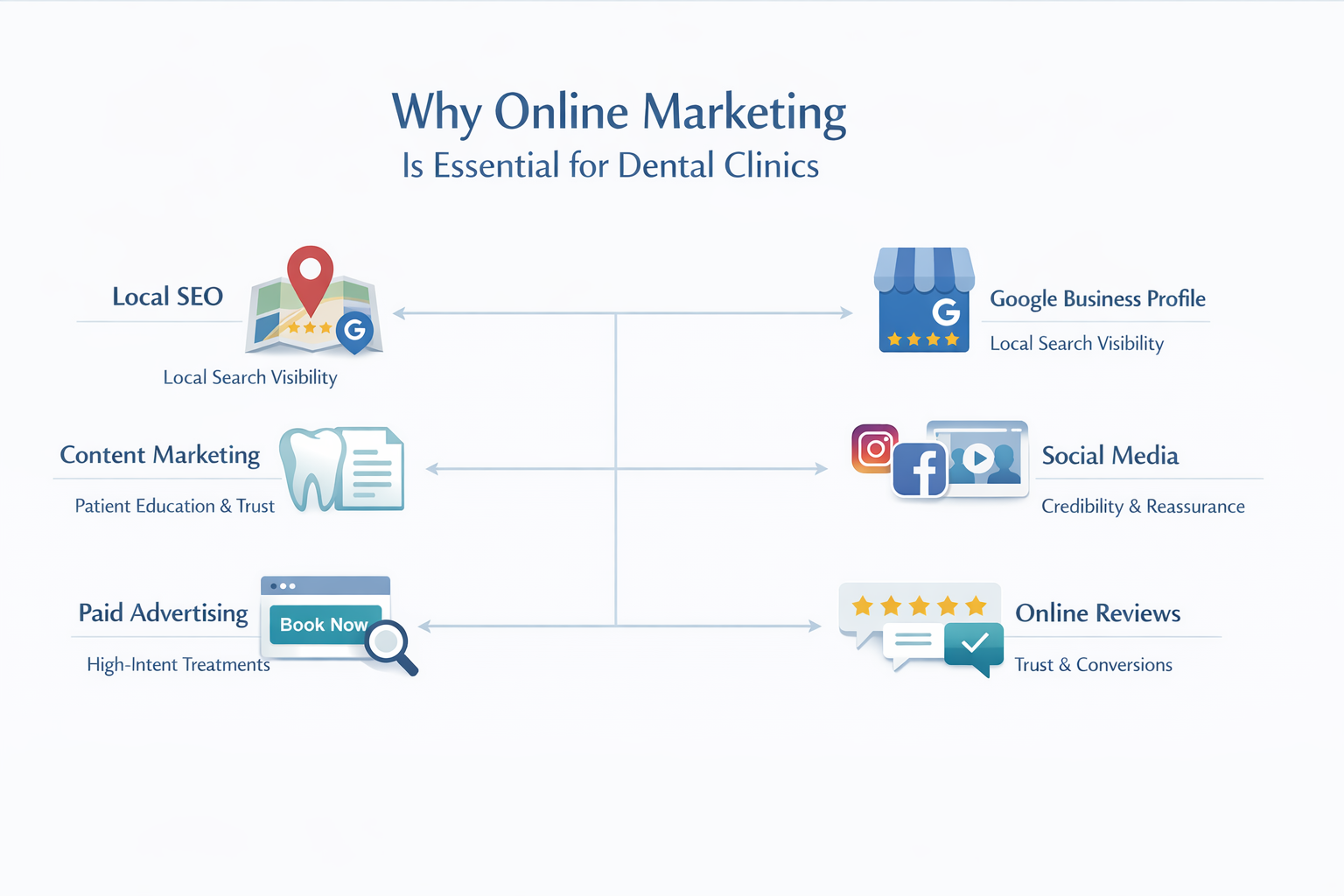
For dental clinics, online marketing is no longer a branding exercise—it is a core patient acquisition channel. Most patients now search for dentists through Google, compare reviews, browse clinic websites, and make decisions before ever calling a practice. Clinics that rely only on referrals or walk-ins are competing at a disadvantage against practices that invest in structured digital marketing.
Online marketing for dentists focuses on visibility at the exact moment a patient is searching, combined with trust signals that reduce hesitation and encourage booking.
What Online Marketing Means for Dentists
Online marketing for dental clinics is the coordinated use of digital channels to attract, convert, and retain patients. Unlike generic digital marketing, dental marketing must account for local intent, medical trust, and regulatory sensitivity.
Effective dental online marketing typically includes:
Search engine optimization (SEO) for local and treatment-based searches
Google Maps and local listings optimization
Paid advertising for high-intent procedures
Content that educates and reassures potential patients
Reputation management and patient reviews
Why Online Marketing Is Essential for Dental Clinics
Dental services are location-based and decision-driven. Patients rarely browse casually; they search when they have pain, cosmetic goals, or treatment needs. Online marketing allows clinics to appear precisely at those moments.
Key benefits include:
Increased visibility for local searches such as “dentist near me”
Higher patient quality through intent-driven traffic
Reduced dependency on third-party referral platforms
Stronger brand trust through reviews and expert content
Local SEO is the most critical online marketing channel for dentists. It determines whether a clinic appears in Google Maps and local search results.
Key local SEO elements for dentists:
Optimized Google Business Profile with accurate categories and services
Consistent clinic name, address, and phone number across directories
Location-specific service pages (e.g., dental implants in a specific city)
Regular patient reviews with natural keyword signals
High-quality local backlinks from medical and community sources
When implemented correctly, local SEO delivers continuous patient leads without ongoing ad spend.
Content Marketing for Dental Clinics
Content marketing builds trust before the first appointment. Patients want clarity about procedures, outcomes, costs, and recovery expectations.
High-performing dental content includes:
Procedure explanations written in patient-friendly language
Before-and-after educational guides (without misleading claims)
Answers to common treatment questions
Blog posts addressing pain points, fears, and misconceptions
This type of content supports SEO, improves conversion rates, and strengthens E-E-A-T signals when written or reviewed by dental professionals.
Paid Advertising: When and How Dentists Should Use It
Paid ads are effective when focused on high-intent treatments rather than general awareness.
Best uses of paid advertising for dentists:
Emergency dental services
Cosmetic dentistry (veneers, whitening, smile makeovers)
Dental implants and orthodontics
New clinic openings or special availability
Successful dental ad campaigns depend on precise targeting, compliant messaging, and landing pages optimized for bookings rather than traffic volume.
Social Media Marketing for Dentists
Social media is not a direct replacement for SEO or ads, but it plays a supporting role in credibility and patient reassurance.
Effective uses include:
Showcasing the clinic environment and staff professionalism
Educational short-form videos explaining treatments
Highlighting real patient experiences (with consent)
Answering common questions in a non-promotional way
Consistency and professionalism matter more than follower count.
Online Reviews and Reputation Management
For dentists, reviews influence patient decisions as strongly as search rankings.
Best practices include:
Actively requesting reviews after successful appointments
Responding professionally to both positive and negative feedback
Avoiding incentives that violate platform policies
Monitoring review platforms regularly
A strong review profile improves conversion rates across all marketing channels.
Measuring Success in Dental Online Marketing
Metrics should focus on patient acquisition, not vanity indicators.
Meaningful KPIs include:
Appointment bookings from organic and paid traffic
Phone calls and form submissions
Cost per lead for paid campaigns
Visibility for treatment-specific keywords
Review growth and sentiment trends
Data-driven optimization is what separates sustainable growth from short-term traffic spikes.
References
Google Search Central
Creating helpful, reliable, people-first content. Google Developers Documentation.
https://developers.google.com/search/docs/fundamentals/creating-helpful-contentGoogle Search Central Blog
Google Search’s guidance on AI-generated content and quality signals (E-E-A-T).
https://developers.google.com/search/blog/2023/02/google-search-ai-contentAmerican Dental Association
Patient communication, ethics, and advertising guidance for dental practices.
https://www.ada.orgBrightLocal
Local Consumer Review Survey – insights on how patients use reviews to choose local healthcare providers.
https://www.brightlocal.com/researchHubSpot
Digital marketing benchmarks and content marketing research for service-based businesses.
https://www.hubspot.com
A useful rule is to budget based on goals, not percentages. Start small, measure ROI, and scale what works. If you have access to in-kind programs like Ad Grants, invest time in optimization and conversion improvements first.
Social can drive discovery, but your website is where trust is verified and conversions are owned. You can use native fundraising tools where eligible, but you still need a credible home base that explains impact and accountability.
Email is typically the most controllable channel for retention because you own the list and can automate personalized journeys. Benchmarks and reports show nonprofits can achieve strong engagement when email is used strategically.
By being more specific. Focus on a narrow set of high-intent search topics, tell real stories from the field, and publish proof points consistently. Trust plus clarity often beats volume.