
Digital marketing is one of the few modern careers where formal degrees are optional, career paths are flexible, and skills matter more than titles. People transition into it from journalism, sales, customer service, engineering, design, and even unrelated fields. What unites successful beginners is not prior experience, but a structured approach to learning, practicing, and proving real-world ability.
This guide is written for people who want to enter digital marketing with no previous experience and need a realistic, step-by-step path grounded in industry standards, trusted learning sources, and current hiring expectations.
Understanding What “Digital Marketing” Actually Includes
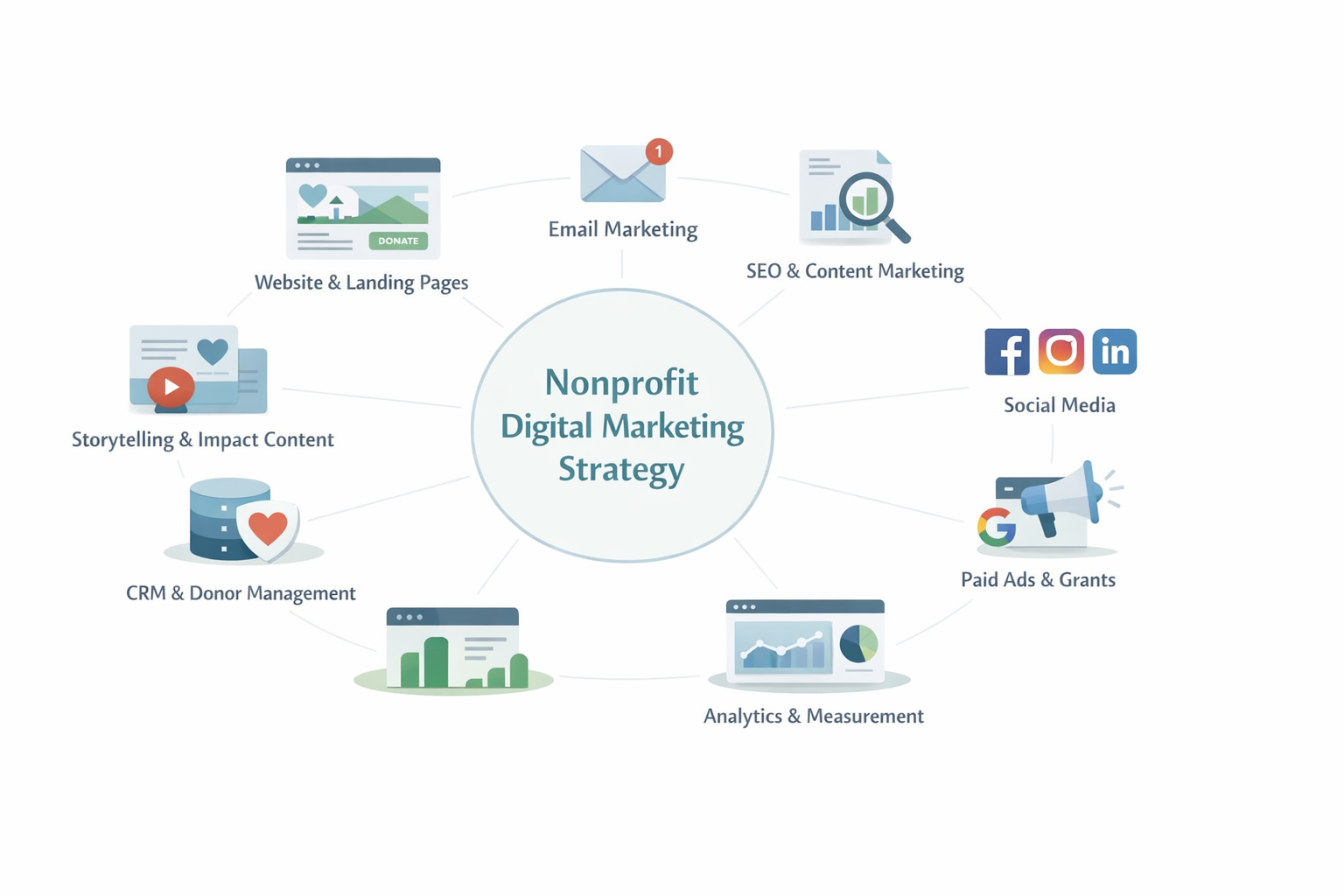
Before learning tools or courses, it’s essential to understand what digital marketing really means in practice. It is not a single job, but a collection of disciplines that help businesses attract, convert, and retain customers online.
Core areas include:
Search Engine Optimization (SEO): Improving visibility in organic search results.
Content Marketing: Creating articles, videos, emails, and guides that educate and convert.
Paid Advertising (PPC): Running ads on search engines and social platforms.
Social Media Marketing: Growing and engaging audiences on platforms like LinkedIn, Instagram, and TikTok.
Email Marketing & Automation: Building lists and nurturing leads.
Analytics & Conversion Optimization: Measuring performance and improving results.
Most entry-level roles focus on one or two channels, not everything at once. Your goal as a beginner is to understand the ecosystem, then specialise gradually.
Why Digital Marketing Is Beginner-Friendly
Digital marketing remains accessible because of three structural realities:
Public knowledge: The platforms themselves publish free documentation and training.
Measurable skills: Results can be demonstrated with data, not credentials.
Low barrier to practice: You can experiment with personal projects at minimal cost.
Major platforms like Google and Meta actively encourage new marketers by offering open learning resources and certifications.
Step 1: Learn the Fundamentals From Trusted Sources
Avoid random tutorials and influencer shortcuts. Start with authoritative, platform-backed education that reflects how the industry actually works.
High-quality beginner resources include:
Google Digital Garage by Google
Covers fundamentals of SEO, search ads, analytics, and online strategy.HubSpot Academy
Strong foundation in content marketing, inbound strategy, and email marketing.Coursera (partnered with universities and companies)
Offers structured marketing programs with academic rigour.
Focus on understanding concepts, not memorizing definitions. At this stage, clarity matters more than speed.
Step 2: Choose One Entry-Level Specialisation
Trying to “learn digital marketing” as a whole is one of the most common beginner mistakes. Hiring managers look for focus, not surface-level familiarity with everything.
Beginner-friendly specialisations include:
Search Engine Optimisation (SEO)
Ideal for analytical thinkers who enjoy writing and research. SEO teaches how search engines evaluate content, structure, and authority.
Content Marketing
Suitable for writers, editors, and storytellers. This path emphasises audience research, messaging, and long-term growth.
Paid Advertising (PPC)
Appeals to data-oriented learners. Focuses on campaign structure, targeting, budgets, and performance metrics.
Social Media Marketing
Best for people who understand online communities and brand voice. Strategy matters more than posting frequency.
Choose one area to study deeply for 60–90 days before expanding.
Step 3: Practice Without Waiting for a Job
Experience in digital marketing is created, not granted. You don’t need permission to start.
Practical ways to build experience:
Launch a simple blog or website and optimize it for search.
Create content around a niche you understand.
Run a small test ad campaign with a limited budget.
Manage a social media page for a local business or personal brand.
Analyze existing websites and write optimization reports.
What matters is documenting your decisions and results, even if the project is small.
Step 4: Learn the Tools Used by Professionals
Digital marketing relies on software, but beginners only need a few essentials:
Google Analytics for traffic and behavior analysis.
Google Search Console for SEO performance.
Email tools like Mailchimp or HubSpot.
Keyword research tools (free tiers are enough at first).
Basic design tools like Canva.
You are not expected to master every tool. Employers look for tool literacy, not tool dependency.
Step 5: Build a Portfolio That Proves Skill, Not Theory
A strong beginner portfolio answers one question: Can this person apply knowledge to real situations?
Your portfolio can include:
Case studies from personal projects.
Before-and-after performance metrics.
Content samples with strategic explanation.
Website audits and recommendations.
Campaign breakdowns, even hypothetical ones with solid reasoning.
Publishing these on a personal website or LinkedIn profile dramatically increases credibility.
Step 6: Position Yourself for Entry-Level Roles
Common beginner job titles include:
Digital Marketing Assistant
SEO Intern or Junior SEO Specialist
Content Marketing Coordinator
Paid Media Assistant
Marketing Analyst (Junior)
When applying, focus your resume on skills, projects, and outcomes, not job history alone. Employers value demonstrated understanding of platforms, metrics, and strategy.
Step 7: Understand What Employers Actually Look For
Hiring managers consistently prioritize:
Clear thinking and structured problem-solving.
Ability to explain decisions using data.
Willingness to learn and adapt.
Familiarity with current best practices.
Evidence of self-directed learning.
They are less concerned with degrees and more interested in how you think and execute.
Common Mistakes Beginners Should Avoid
Trying to learn every channel at once.
Overvaluing certifications without practice.
Copying strategies without understanding context.
Focusing on tools instead of fundamentals.
Expecting fast results without iteration.
Digital marketing rewards patience and consistency more than shortcuts.
How Long Does It Take to Get Your First Role?
For most beginners who study consistently and practice intentionally:
3–4 months: Solid foundation + small projects.
6 months: Portfolio-ready and employable at junior level.
12 months: Specialization depth and career acceleration.
Progress depends more on quality of learning than hours spent.
Final Perspective: Digital Marketing Is a Skill-Based Career
Digital marketing remains one of the most accessible professional fields because it is built on measurable impact. If you can demonstrate that you understand audiences, channels, and results, lack of prior experience becomes irrelevant.
Start with fundamentals, specialize deliberately, practice publicly, and document your learning. That combination is how most successful digital marketers begin.
Authoritative References for Further Learning
Google Search Central & Digital Garage – by Google
HubSpot Academy – by HubSpot
Coursera Marketing Programs – by Coursera
LinkedIn Marketing Insights – by LinkedIn
Yes. Digital marketing is one of the easiest fields to learn independently because the main platforms publish their own documentation and training. Resources from companies like Google and HubSpot allow beginners to understand real-world practices without formal experience.
For most beginners, it takes around three to six months of consistent learning and practice to reach an entry-level standard. The timeline depends on how focused your learning is and whether you apply what you learn through real projects.
SEO, content marketing, social media marketing, and paid advertising are all suitable entry points. SEO and content marketing are often recommended for beginners because they emphasize fundamentals like research, strategy, and audience understanding rather than budgets.
Certifications can be useful when they come from recognized platforms and are supported by practical application. On their own, certifications do not guarantee a job, but they help demonstrate foundational knowledge and commitment to learning.
Yes. Digital marketing continues to grow as businesses rely more on online channels. With experience, marketers can specialize, move into strategy roles, freelance, or build their own businesses. Skills also transfer well across industries.